Dunwoody's Apartment Boom Is Real. It Just Isn't Your Housing Market.
August 27, 2026
August 27, 2026
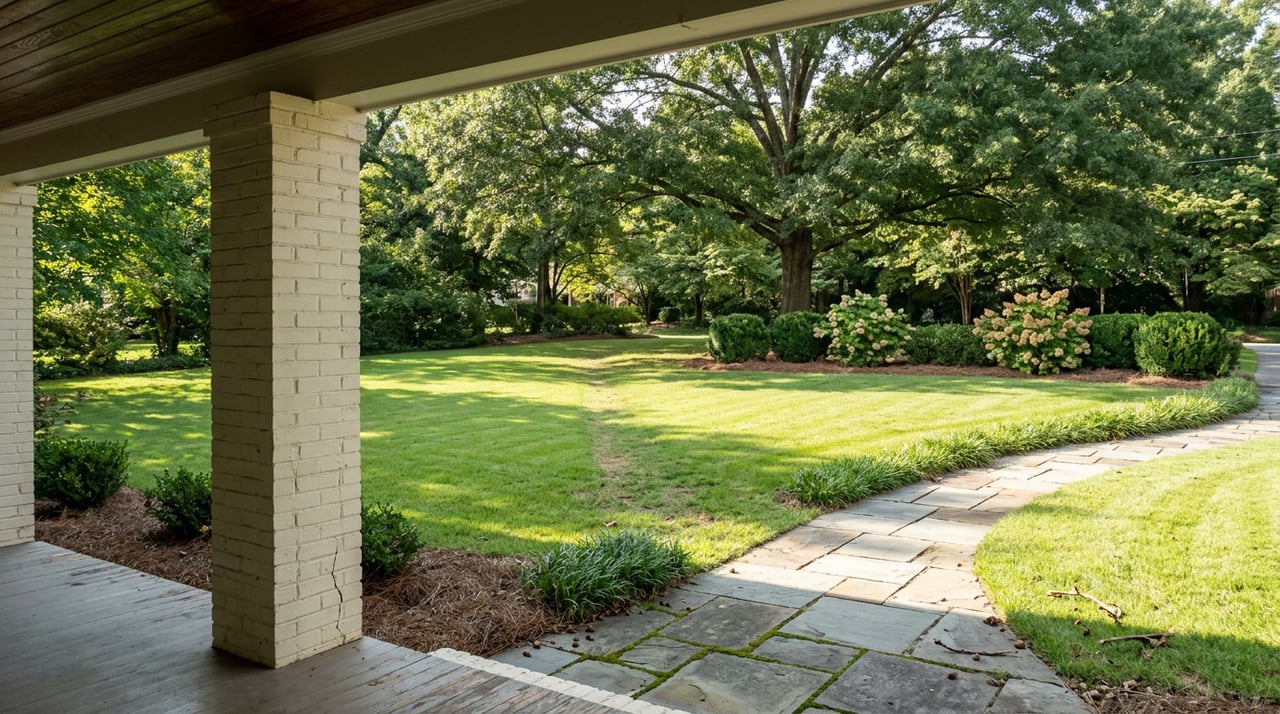
A buyer touring Dunwoody Village this summer stood in a driveway on a quiet street a few blocks from the shops, pointed toward a construction crane rising over Perimeter Center, and asked a fair question. If the city is adding that many new units a mile away, won't some of that supply eventually loosen up the market for a house like this one?
The honest answer is no, and the reason why says more about how Dunwoody actually works than any single listing could.
Perimeter Center has spent the past two years turning into one of the more active redevelopment corridors in metro Atlanta. High Street, the mixed-use project at Perimeter Center Parkway and Hammond Drive, opened its first phase in September 2024 with 598 apartments, roughly 150,000 square feet of retail and restaurants, and about 320,000 square feet of office space wrapped around a 75-acre park. Every one of those apartments is leased. Dunwoody's economic development director has pointed to High Street and the adjacent Campus 244 office campus as roughly $600 million in combined investment.
Campus 244 isn't finished changing shape either. Its owners, The Georgetown Company and RocaPoint Partners, filed a rezoning request and a state Development of Regional Impact application this year to add close to 400,000 square feet of residential space to the 13-acre site, on top of pushing total office square footage there to around 600,000. It's a revival of an idea a previous owner floated and then dropped in the 2010s, and the city has said it won't take up the rezoning vote until the regional review process wraps.
A few blocks away, the property at 84 Perimeter Center East has been through fifteen years of proposals: a hotel, age-restricted apartments, owner-occupied condos, and now a mixed-use plan with senior apartments, retail, and a drive-through restaurant tentatively identified as Portillo's. The city council has deferred a decision more than once, most recently in January, with the mayor telling the applicant's representative that the next time they come back, they need to be ready.
Even Perimeter Mall is rearranging itself. Mall ownership told the city council in February that it plans to relocate the food court out of the center of the building to a spot near Macy's, converting the current food court into new concourse and retail space.
None of this is speculation about what might get built someday. It's construction and leasing and zoning votes happening right now, and it's easy to look at all of it and assume the ripple has to reach the single-family streets nearby.
It doesn't, because Dunwoody planned it that way.
The city's long-range framework, built out through its 2020 to 2040 comprehensive plan and refined in the 2023 Edge City 2.0 study, calls for the scale of new development to be highest right around the Dunwoody MARTA station and to decrease as you move north and east, toward the established neighborhoods. That isn't a side effect of the market. It's the stated design. Edge City 2.0 was a joint effort between the city and the DeKalb Board of the Perimeter Community Improvement Districts, carried out with planning firm Pond & Company, and its whole premise is reshaping the commercial core while protecting the neighborhood character around it.
Even the infrastructure spending follows that split. The Ashford Dunwoody Path, a 14-foot bike and pedestrian route connecting Hammond Drive to Perimeter Center West, was delivered as a partnership between the city and the Perimeter CIDs, funded specifically to serve the office and apartment corridor. The complete-streets redesign moving through Dunwoody Village is a separate, smaller-scale project aimed at safety and walkability on an already built-out stretch, not at adding housing capacity.
Put plainly, Dunwoody has two real estate markets operating a few miles apart, and the zoning code keeps them from touching. Here's what that split looks like in practice.
| Village and Georgetown (single-family) | Perimeter Center corridor | |
|---|---|---|
| What's been added recently | Essentially nothing at scale, same footprint of streets for decades | 598 apartments at High Street, up to 400,000 more square feet proposed at Campus 244 |
| Development priority per the city's own plan | Protect existing character | Concentrate density near MARTA |
| What a buyer is actually competing for | A fixed, aging stock of houses | New leased units, not homes for sale |
If the apartment boom were quietly relieving pressure on the single-family market, you'd expect to see more houses for sale, longer time on market, or some softening in what sellers actually collect at closing. The data doesn't show that.
Over the three months ending in May 2026, the median sale price for a single-family home in Dunwoody was $712,000, up 5.1 percent from the same window a year earlier. Homes were selling in a median of 16 days, down from 22 days the year before. Sales volume barely moved: 129 homes sold in May 2026 against 128 in May 2025, essentially flat in a year when thousands of new apartment units opened a short drive away. If new Perimeter supply were functioning as a release valve for buyer demand, that volume number would have grown. It didn't.
Asking prices tell a slightly different but related story. As of this month, single-family homes listed in Dunwoody carried a median asking price around $647,000, about 6 percent lower than a year ago. That's not evidence of a cooling market so much as sellers pricing more conservatively going into the slower back half of the year, since the widely cited pattern for Dunwoody is that inventory rises and demand softens seasonally between August and December. The homes that actually closed in the spring quarter still sold for more than they did a year earlier. Sellers are adjusting their opening number, not their leverage.
That's the mechanism the crane on the horizon obscures. The apartment boom is a rental and leasing story unfolding in one submarket. The single-family market a few blocks away is still working off the same scarce, slow-turning inventory it always has, because the zoning code was written to keep it that way.
If your plan is to wait out the Perimeter construction cycle hoping it eventually translates into more single-family choices or softer pricing in Dunwoody Village or Georgetown, the timeline you're picturing doesn't exist. The city's own planning documents say the growth stays where it is.
That reframes the actual decision. If proximity to MARTA, walkable retail, and a newer building matter more to you than a yard and an established street, the Perimeter corridor is worth a serious look, and it's only getting more amenity-rich as High Street's retail fills in and the mall reworks its dining options. If what you want is the quieter, tree-lined version of Dunwoody, plan your search around genuine scarcity. That means moving quickly when something comes on the market, understanding that 16 days is a realistic clock, and having financing and a due diligence approach ready before you're competing for a house that won't sit long enough for you to think it over twice.
Either choice is reasonable. Confusing one submarket's momentum for the other's is the mistake worth avoiding.
Will Campus 244's apartment plan add any single-family inventory? No. The filing is for a roughly 400,000-square-foot residential building, which under Georgia's development review process means multifamily rental units, not houses for sale. The city has said it will wait for the state Development of Regional Impact review to finish before taking up the rezoning vote.
Does the 84 Perimeter Center project affect nearby home values? It's still in flux after fifteen years of proposals, and the city council has deferred action multiple times. Until zoning and a final site plan are approved, it's not a factor buyers or sellers in the surrounding neighborhoods need to price in yet.
Is now a good time to buy in Dunwoody Village or Georgetown specifically? That depends on your timeline and budget more than on anything happening at Perimeter Center. The single-family market there has kept moving fast and holding value regardless of what's under construction a few miles away, so the more useful question is whether you're ready to move when the right house comes up.
If you're weighing a quieter street in Dunwoody Village against something closer to the Perimeter corridor, or you just want a clear read on what a specific block is actually seeing in offers right now, Ellen Cook can walk you through both sides of the map before you write anything down. Request a personalized home valuation or buyer consultation to start.
Stay up to date on the latest real estate trends.
Ellen Thomas blends analytical insight with refined service to deliver a seamless real estate experience. Known for her thoughtful guidance and strong client advocacy, she helps buyers and sellers navigate every move with confidence and clarity.